
Born from lived experience and shaped by the voices of asylum seekers themselves, Navigating Sanctuary Life is one of Scotland’s newest charities and one that places dignity, culture and human connect
Navigating Sanctuary Life: The Scottish Charity Rebuilding Dignity, Community and Hope
When Ivan Kakembo talks about the people he supports, he doesn’t speak in abstract policy terms. He talks about lives. Lives uprooted, lives paused, lives surviving rather than living. And it was those conversations, repeated over years of working with asylum seekers, refugees and ethnic minority communities in Glasgow, that led him to create Navigating Sanctuary Life, one of Scotland’s newest lived‑experience‑led charities
.
The organisation was born from what Ivan describes as “a clear and painful gap” in the support available to people seeking sanctuary. Many of the individuals he met were dealing not only with poverty and instability, but with something harder to measure: profound loneliness, cultural displacement, and the feeling of being invisible in the communities they were placed in.
“People were surviving rather than truly living,” he says. “They were moved into unfamiliar areas, separated from family networks, unable to work, and living on extremely limited financial support. There were still significant gaps around early community connection, culturally appropriate food, and safe spaces where people felt genuinely welcomed.”
The turning point came through direct conversations with people who had recently been evicted from asylum accommodation or were living in temporary housing. Many described going days without meaningful interaction. Others felt lost in a system they didn’t understand. “We realised there was a need for a community‑led organisation that combined practical support with dignity, inclusion and human connection,” Ivan says. “That is what led to Navigating Sanctuary Life.”
Dignity as a foundation
Dignity is not a slogan for the charity — it is the organising principle behind everything they do. Ivan is clear that people should never feel like passive recipients of charity. Many have already experienced trauma, displacement and a loss of control over their lives. Restoring agency is central.
“In practice, that means listening closely to what people actually need rather than assuming we know what’s best,” he explains. Participants help shape projects, influence decisions around meals, workshops and activities, and contribute ideas that directly shape the charity’s direction. The majority of trustees and volunteers have lived experience of the asylum system, grounding decisions in real understanding rather than theory.
This approach is especially important given the financial reality asylum seekers face. Most live on just £49.18 a week — around £7 a day. “It forces people into impossible choices,” Ivan says. “A bus ticket alone can take up a significant portion of someone’s daily allowance. People skip meals, rely on food banks, or become socially isolated because they can’t afford to participate in normal community life.”
The emotional impact, he adds, is often overlooked. “It affects confidence, mental wellbeing, and people’s sense of dignity. Many asylum seekers are highly skilled and want to contribute positively to society, but the system leaves them feeling trapped and excluded.”
Food as connection, culture and care
One of Navigating Sanctuary Life’s flagship initiatives is the Dignity in Food Provision project — a programme that goes far beyond emergency meals. For Ivan, culturally appropriate food is a powerful tool for wellbeing and community cohesion.
“Food provides comfort, familiarity and a sense of identity during an uncertain period,” he says. “When people are given food that respects their cultural and religious needs, it sends a powerful message that they are valued.”
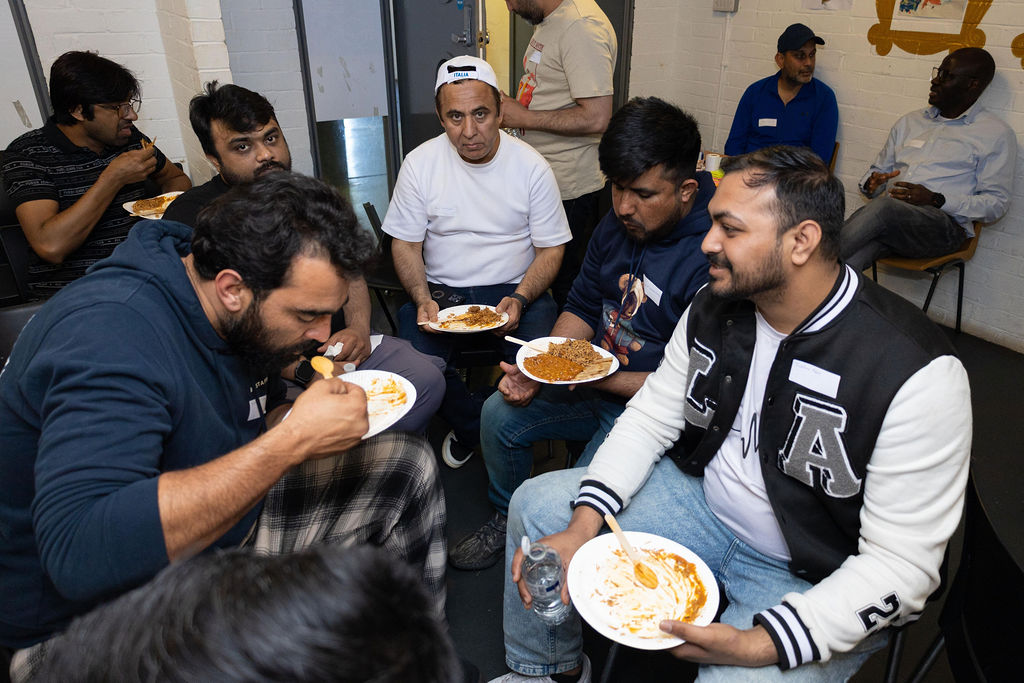
Shared meals have become a gateway to deeper connection. People gather, talk, share stories, and rebuild a sense of belonging. The charity works with partners like FareShare to ensure food provision is culturally respectful, and with organisations like SAMH to support mental health needs that often go unspoken.
“Effective partnership is built on trust and shared values,” Ivan says. “No single organisation can meet every need alone. Strong partnerships allow us to connect people to specialist services while building stronger community networks.”
Learning from the community
Navigating Sanctuary Life’s projects are shaped directly by what people say they need. Community consultations revealed widespread loneliness, isolation and cultural displacement. People missed the social and cultural rituals of home — especially around food. Others were anxious about homelessness, sudden evictions, or navigating complex support systems.
“We heard people describe going days without meaningful conversation,” Ivan says. “Some felt invisible. Those conversations influenced everything we prioritised.”
The charity’s events, workshops and peer‑support sessions have become lifelines. Ivan says he is continually moved by the resilience of participants. “People still find ways to support others even when they themselves are struggling. Sometimes what people value most is simply having a space where they feel listened to without judgement.”
Some who first arrived feeling isolated later became volunteers and peer supporters — a transformation Ivan describes as one of the most powerful parts of the work.
A vision for the future
Looking ahead, Ivan’s ambition is clear: to build a Scotland where asylum seekers, refugees and ethnic minority groups are not marginalised or isolated, but recognised as valued members of society.
“Our long‑term vision is to develop sustainable, community‑led projects that address both immediate hardship and longer‑term integration, wellbeing and empowerment,” he says.
He wants policymakers and funders to understand that the people Navigating Sanctuary Life supports are not defined by vulnerability. “They are individuals with resilience, talent, ambitions and enormous potential who are often navigating systems that are extremely difficult and isolating.”
Much of this work has only been possible thanks to support from key funders including GCVS Glasgow Wellbeing Fund, Corra Foundation and The National Lottery, alongside CEMVO, a central partner in helping the charity strengthen its community‑led approach.
What they need most, he says, is dignity, stability, opportunity and belonging. “When communities invest in those values, the benefits are felt not only by asylum seekers and refugees, but by society as a whole.”
If you would like to learn more about Navigating Sanctuary Life or explore volunteering opportunities, visit their website at
Home
This article is from Craig Jinks, and we appreciate his recognition of the work of Navigating Sanctuary Life.
Here is the link for the article. https://craigjinks.substack.com/p/a-place-to-be-seen-again-how-navigating